
Panel on AI + Cybersecurity
Giuseppe F. Italiano
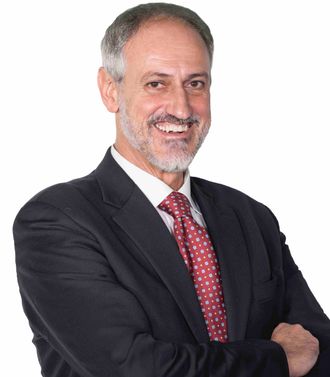
Short Biography:
Currently Deputy Rector of Artificial Intelligence, Founding Director of the Research Center “AI4Society” and Professor of Computer Science at Luiss University in Rome, Italy. After a PhD in Computer Science from Columbia University, Prof. Italiano was a Research Staff Member at the IBM T. J. Watson Research Center in Yorktown Heights (NY, USA). He then went back to Italy as a Full Professor, and has been Visiting Professor in several international universities, including Columbia University (NY, USA), Université Paris-Sud (Francia), Max–Planck–Institut fur Informatik, Saarbrücken (Germania), Hong Kong University of Science & Technology. In 2016 he was nominated Fellow of the European Association for Theoretical Computer Science. He has been doing research on algorithms, consulting with big international companies and co-founded several tech startups.
Iwen Coisel

Short Biography:
Dr. Iwen Coisel is a digital forensic examiner at the European Cybercrime Centre (EC3) at Europol since May 2021, where he focuses on the decryption of digital evidence in operational investigations.
He received his Ph.D. in cryptography from Orange Labs (France) in 2009 and previously held research positions at the Université catholique de Louvain (Belgium) and the Joint Research Centre of the European Commission in Ispra (Italy). His work spans cryptography, cybersecurity, digital forensics, password cracking techniques, and password strength metrics.
More recently, his work has turned toward the implications of quantum technologies for law enforcement, exploring both the cryptographic threats posed by quantum computing and the opportunities it may create for future digital investigations.
Luca Caviglione
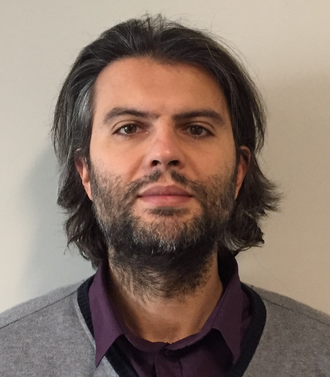
Short Biography:
Luca Caviglione is a Research Director at the Institute for Applied Mathematics and Information Technologies (IMATI) of the National Research Council of Italy (CNR). He holds a Ph.D. in Electronic and Computer Engineering from the University of Genoa, Italy. His research interests include steganographic malware, covert communications and the use of AI to support cybersecurity tasks. He regularly serves in TPC of major international conferences, organizes workshops, and has been an Associate Editor for the IEEE Transactions on Information Forensics and Security. From 2020 to 2025 he was the Head of the IMATI Research Unit of National Inter-University Consortium for Telecommunications, and he is the Director of the IMATI Node of the HPC: Key Technologies and Tools Laboratory of National Interuniversity Consortium for Informatics. Currently he is the Principal Investigator for CNR within the project PERUN - Protecting Sensitive Cyber Ecosystems from Upcoming Next Generation and AI-generated Malware Threats funded by the Horizon Europe framework. He is in the board of the PhD program in Security, Risk and Vulnerability of the University of Genoa, Italy and he regularly teaches courses to PhD and M.Sc. students.
Massimo Bernaschi
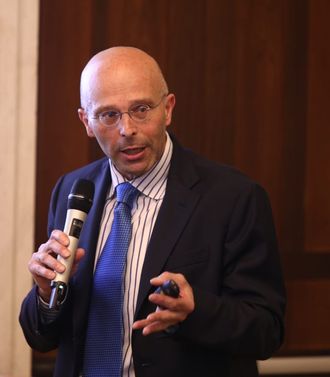
Short Biography:
Massimo Bernaschi graduated in Physics with Giorgio Parisi.
He worked for 10 years at the European Center for Scientific and Engineering IBM Computing
receiving two Outstanding Technical Achievement Awards.
Since 1998 he has been Director of Technology at the Institute for Applied
Computing of the National Research Council of Italy.
He teaches Blockchain, Cryptocurrencies, and Digital Forensics at the "LUISS" in Rome.
He is part of the Technical Committee of Experts of the Ministry of Economy
and Finance for developing the System for the Analysis of Public Debt Securities Issuance Portfolios.
He was part of the Ministry of Innovation's task force for data management during the COVID-19 emergency.
He is delegated to the European Defense Agency for CapTech “Communication, Information System and Networks”.
He has developed software packages such as REMUS, OpenCapwap, SockMi, BitCracker, CImmSim.
For his contributions to the development of GPU programming, he received the title of CUDA Fellow from Nvidia.
Since 2022 he has been Vice President of GARR, the Consortium that manages the Research Network.
Michał Choraś
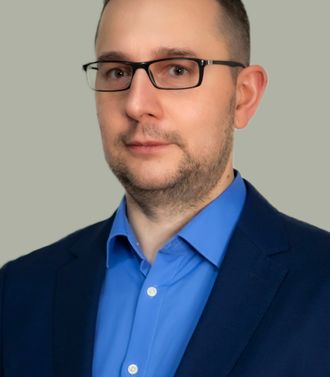
Short Biography:
Michał Choraś is a full professor of computer science. He works at Bydgoszcz University of Science and Technology, Poland. He is also affiliated with FernUniversitat in Hagen, Germany, where he was a Project Coordinator for H2020 SIMARGL (Secure intelligent methods for advanced recognition of malware and stegomalware). Currently, he is coordinator of Horizon Europe PERUN project (Protecting Sensitive Cyber Ecosystems from Upcoming Next Generation and AI-generated Malware Threats). He has been involved in more than 30 EU and national projects (e.g., SocialTruth, STARLIGHT, InfraStress and SPARTA). He is an expert in artificial intelligence, cybersecurity, xAI, pattern recognition and disinformation detection. He is the author and co-author of over 390 reviewed scientific publications. Since 2020 he has been included in the prestigious World’s Top 2% Scientists ranking — both in the general category and in the list for the previous years.