
Speakers
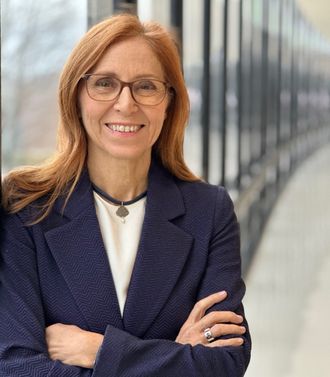
Francesca Rossi
Short Biography:
Francesca Rossi is an IBM Fellow and the IBM Global Leader for Responsible AI and AI Governance.
She is based at the T.J. Watson IBM Research Lab, New York, USA.
Her research interests focus on artificial intelligence, with special focus on constraint reasoning, preferences, multi-agent systems, computational social choice, neuro-symbolic AI, cognitive architectures, and value alignment. On these topics, she has published over 220 scientific articles.
She is a fellow of both the worldwide association of AI (AAAI) and the European one (EurAI). She has been president of IJCAI (International Joint Conference on AI) and of AAAI.
She has a long and deep experience in AI governance and best practices for corporate AI ethics and risk assessment, working with many multi-stakeholder global organizations. She has been a founding member of the board of the Partnership on AI, she co-chairs the OECD Expert Groups on AI Futures and Trustworthy AI Investments, and she has been a member of the European Commission High Level Expert Group on AI.
She also co-chairs the IBM Responsible Technology board, which provides the coordinated governance around all AI ethics activities for the whole company.
Title:
AI ethics and governance
Abstract:
Supported by AI, we will be able to make more grounded decisions and to focus on the main values and goals of a decision process rather than on routine and repetitive tasks. However, such a powerful technology also raises some concerns, related to privacy, fairness, value alignment, explainability, accountability, transparency, misinformation, deep fakes, copyright, and much more. These concerns are among the obstacles that hold AI back or that cause worry for current AI users, adopters, and policy makers. Without concrete answers to these questions, many will not trust AI, and therefore will not fully adopt it nor get its positive impact. In this talk I will present the main issues around AI ethics and safety and how they have evolved over the years, as AI capabilities advanced. I will also discuss the ROI of AI ethics, discussing both instrumental and value-based approaches to investing in AI ethics and governance.
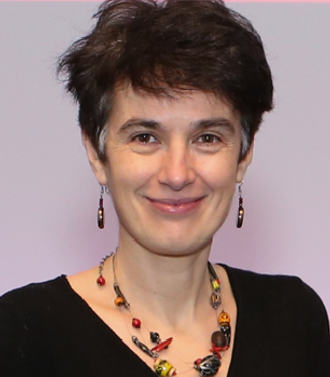
Mihaela van der Schaar
Short Biography:
Mihaela van der Schaar is the John Humphrey Plummer Professor of Machine Learning, Artificial Intelligence and Medicine at the University of Cambridge. In addition to leading the van der Schaar Lab, Mihaela is founder and director of the Cambridge Centre for AI in Medicine (CCAIM).
Mihaela was elected IEEE Fellow in 2009 and Fellow of the Royal Society in 2024. She has received numerous awards, including the Johann Anton Merck Award (2024), the Oon Prize on Preventative Medicine from the University of Cambridge (2018), a National Science Foundation CAREER Award (2004), 3 IBM Faculty Awards, the IBM Exploratory Stream Analytics Innovation Award, the Philips Make a Difference Award and several best paper awards, including the IEEE Darlington Award. She was a Turing Fellow at The Alan Turing Institute in London between 2016 and 2024. In 2025, she was appointed as Spinoza Guest Professor at Amsterdam University Medical Center.
Mihaela is personally credited as inventor on 35 USA patents (the majority of which are listed here), many of which are still frequently cited and adopted in standards. She has made over 45 contributions to international standards for which she received 3 ISO Awards. In 2019, a Nesta report determined that Mihaela was the most-cited female AI researcher in the U.K.
Title:
Rethinking the Role of Scientific Discovery in the Era of AI
Abstract:
The growing availability of large-scale scientific datasets creates opportunities for discovery that are no longer driven by narrowly specified research questions. Instead, science increasingly unfolds through sustained exploration of vast, high-dimensional hypothesis spaces, where multiple explanations, mechanisms, and associations may remain plausible. I refer to this mode of inquiry as hypothesis hunting: an open-ended, cumulative search for insight that challenges traditional, pipeline-based models of scientific discovery.
In this talk, I present a framework that rethinks discovery as an agentic process, in which networks of interacting AI agents and human experts jointly explore, critique, and refine hypotheses under shared norms of evaluation. I will discuss how heterogeneous, LLM-based research agents can self-organize into evolving networks that generate, review, and extend findings—trading off novelty, quality, and diversity over time. Drawing on results from biomedical discovery, including cancer cohort analyses, I will argue that such socially structured agent networks can sustain large-scale exploratory discovery, complementing experimental science while reshaping how knowledge is generated, accumulated, and validated in the era of AI.
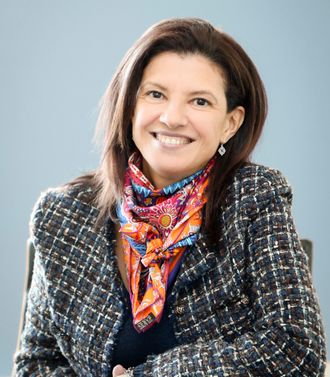
Sihem Amer-Yahia
Short Biography:
Sihem Amer-Yahia is a Silver Medal CNRS Research Director and Deputy Director of the Lab of Informatics of Grenoble. She works on exploratory data analysis and algorithmic upskilling. Prior to that she was Principal Scientist at QCRI, Senior Scientist at Yahoo! Research and Member of Technical Staff at at&t Labs. Sihem served as PC chair for SIGMOD 2023 and as the coordinator of the Diversity, Equity and Inclusion initiative for the database community. In 2024, she received the 2024 IEEE TCDE Impact Award, the SIGMOD Contributions Award, and the VLDB Women in Database Award.
Title:
Exploring Data with Agents
Abstract:
Data Exploration is an incremental process that helps users express what they want through a conversation with the data. This makes data exploration tasks ideal for automation whereas agents are trained to converse effectively with data. While Reinforcement Learning (RL) has shown tremendous advances for training task-specific agents, general-purpose agents like LLMs can also be carefully prompted and orchestrated to achieve specific data exploration tasks. This talks explores this spectrum and discusses open research questions in exploring data with agents.
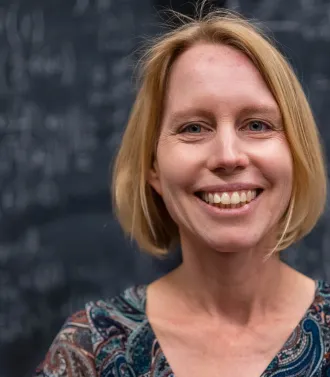
Stefanie Jegelka
Short Biography:
Stefanie Jegelka is a Humboldt Professor at TU Munich and a Visiting Associate Professor in the Department of EECS at MIT. Before that, she was a tenured professor at MIT. She did her postdoc at UC Berkeley and obtained her PhD from ETH Zurich and the Max Planck Institute for Intelligent Systems. Stefanie has received a Sloan Research Fellowship, an NSF CAREER Award, a DARPA Young Faculty Award, the German Pattern Recognition Award, a Best Paper Award at ICML and an invited sectional lecture at the International Congress of Mathematicians. She has co-organized multiple workshops on (discrete) optimization in machine learning, graph representation learning, weight space learning and other related topics, and has served as a program chair of ICML 2022.
Title:
Neural Networks and Algorithms
Abstract:
Deep Learning models are achieving to master increasingly complex tasks that consist of many steps of computation or reasoning. This inspires the perspective of viewing neural networks as learning algorithmic procedures. What could we gain from this perspective? This talk will outline examples and directions. First, an algorithmic view can help understand the capabilities of deep learning models, such as self-correction or the ability to solve certain optimization problems. Second, it can help understand how to design and train models to better solve challenging tasks, from optimization problems to reasoning. Yet, while this view has led to many advances, several open questions remain.
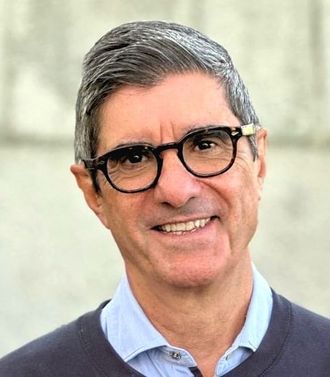
Gianni Riotta
Short Biography:
Gianni Riotta is Pirelli Visiting Professor at Princeton University (Department of French and Italian) and Dean of the Master’s in Journalism and Digital Communication at Luiss University, Rome. He founded the Luiss DataLab and leads the Italian Digital Media Observatory, the national hub of the European Digital Media Observatory against disinformation, where he also serves on the Advisory Board.
A former Editor-in-Chief of Il Sole 24 Ore and TG1 Rai, and Deputy Editor of La Stampa and Corriere della Sera, Riotta has been a correspondent in New York and a columnist for La Repubblica, Foreign Policy, and The Atlantic. His op-eds have appeared in The New York Times, The Washington Post, Le Monde, Financial Times, and The Guardian.
In 2014 President Giorgio Napolitano made Gianni Riotta a Commendatore all’Ordine della Repubblica Italiana. Riotta is a member of the Council on Foreign Relations and Executive Vice-President of the Council for the United States and Italy. His books have been translated into multiple languages, and he has been named among the “World 100 Global Thinkers” by Foreign Policy and Prospect. He lives in New York and Rome.
Title:
The AI Ghosts and Us: Machine Writing as a Spectral Culture
Abstract:
We need a radically new philosophical reading of AI-generated text as a “Ghost” inhabiting contemporary human discourse. Rather than framing large language models (LLMs) as either tools or autonomous intelligences, we can argue that machine writing constitutes a spectral hybrid—neither fully human nor purely artificial, but a liminal presence emerging from the archive of human language.
Drawing on Calvino reflections on combinatorial literature and the “writing machine,” we should revisit the Twentieth-century intuition that narrative could be algorithmically permuted. Calvino saw in literary algorithms both a liberation and a paradox: the machine multiplies possibilities, yet meaning still depends on human interpretation. Today’s LLMs operationalize that combinatorial dream at a planetary scale, transforming statistical inference into prose and blurring the boundary between author and reader.
Karpathy's notion of neural networks encoding patterns learned from data, rather than an explicit set of rules, reveals how AI systems internalize collective textual memory. The model does not “think” as a subject; it resonates. What appears as originality is a probabilistic echo of cultural sediment. The AI text thus resembles a revenant: language returning to us transformed and detached from any single living author.
Revisiting Wiener’s cybernetic theory, we could situate LLMs within feedback loops between humans and machines. The literary output of an AI is not an artificial substitute for human creativity, nor a counterfeit consciousness. It is a ghostly hybrid, generated at the intersection of human archives, algorithmic training, and real-time, effective prompts.
By conceiving AI text as a cultural ghost, we compose a vocabulary in the age of machine writing. The challenge is not to deny the ghost nor to romanticize it, but to learn how to read and live with its spectral presence in our world.